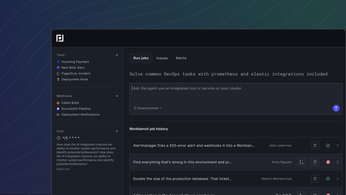
Kubernetes Runtime Security with Falco: A Practical Guide Paid Members Public
Image scans and admission policies can keep known-bad artifacts out of a cluster, but they cannot show what a running container does after deployment. A compromised process may open an unexpected network connection, read sensitive files, or attempt an escape while the workload still matches its declared configuration. Kubernetes runtime

Kubernetes Evicted Pods: Causes and Prevention Paid Members Public
Get a free trial of Plural. Learn why Kubernetes evicted pods happen, how to detect them, and the resource and scheduling strategies that prevent them at...

IaC Security Best Practices for Terraform and Kubernetes Paid Members Public
Apply IaC security best practices across Terraform and Kubernetes with protected secrets, least privilege, policy, drift, and audit-ready delivery.


Kubernetes Exit Code 137: Causes, Fixes, and Prevention Paid Members Public
Schedule a free demo to learn how to diagnose and prevent Kubernetes exit code 137 (OOMKilled) across your fleet. Get the kubernetes exit code 137 guidance...

CSPM for Kubernetes: Capabilities and Gaps Paid Members Public
Learn what CSPM can detect in Kubernetes, where it falls short, and how to evaluate coverage, remediation, integrations, and self-hosted deployment.

EKS Version Upgrade: A Safe, Zero-Downtime Guide Paid Members Public
Schedule a Plural demo to run a zero-downtime EKS version upgrade across your fleet with automated compatibility checks and coordinated upgrade waves.

FailedScheduling: Why Kubernetes Pods Aren't Scheduled Paid Members Public
Learn what a FailedScheduling event means, the CPU, memory, taint, affinity, and node reasons behind it, and how to fix pod scheduling in Kubernetes.

Kubernetes 502 Bad Gateway: Causes and Fixes Paid Members Public
Diagnose and fix Kubernetes 502 bad gateway errors: unhealthy backend pods, bad service selectors, ingress misconfig, and readiness probe failures.