Kubernetes Fleet Management: A Practical Guide
Kubernetes fleet management streamlines multi-cluster operations, security, and policy enforcement. Learn best practices and tools for managing your fleet.

As you scale to multiple Kubernetes clusters, the attack surface grows linearly, but operational complexity grows faster. Without centralized policy enforcement, clusters drift: RBAC rules diverge, network policies become inconsistent, and security controls vary by environment. This fragmentation introduces compliance gaps and creates blind spots that are hard to audit or remediate.
Fleet-level management addresses this by treating security as a declarative, centrally enforced concern. Instead of configuring clusters individually, you define a global security baseline (covering RBAC, network policies, admission controls, and workload constraints) and apply it uniformly across all clusters.
Platforms like Plural operationalize this model by providing a single control plane for policy distribution and enforcement. This ensures every cluster, regardless of region or purpose, converges toward the same security posture. The result is reduced configuration drift, improved auditability, and a scalable path to enforcing organizational compliance standards.
Unified Cloud Orchestration for Kubernetes
Manage Kubernetes at scale through a single, enterprise-ready platform.
Key takeaways:
- Adopt a fleet management model to scale operations: Instead of managing clusters individually, treat them as a single logical unit. This approach centralizes control, standardizes configurations, and prevents the operational bottlenecks that arise when infrastructure grows.
- Implement a GitOps workflow with a secure agent architecture: Treat your infrastructure as code by using Git as the definitive source for all configurations. This method, paired with an agent-based pull model, ensures consistent deployments and enhances security by eliminating the need for direct inbound access to your clusters.
- Automate security and policy enforcement across your fleet: Manual configuration is a primary source of security gaps and operational drag. Use automation to enforce centralized RBAC and apply consistent policies, which reduces risk and frees your platform team from repetitive tasks.
What Is Kubernetes Fleet Management?
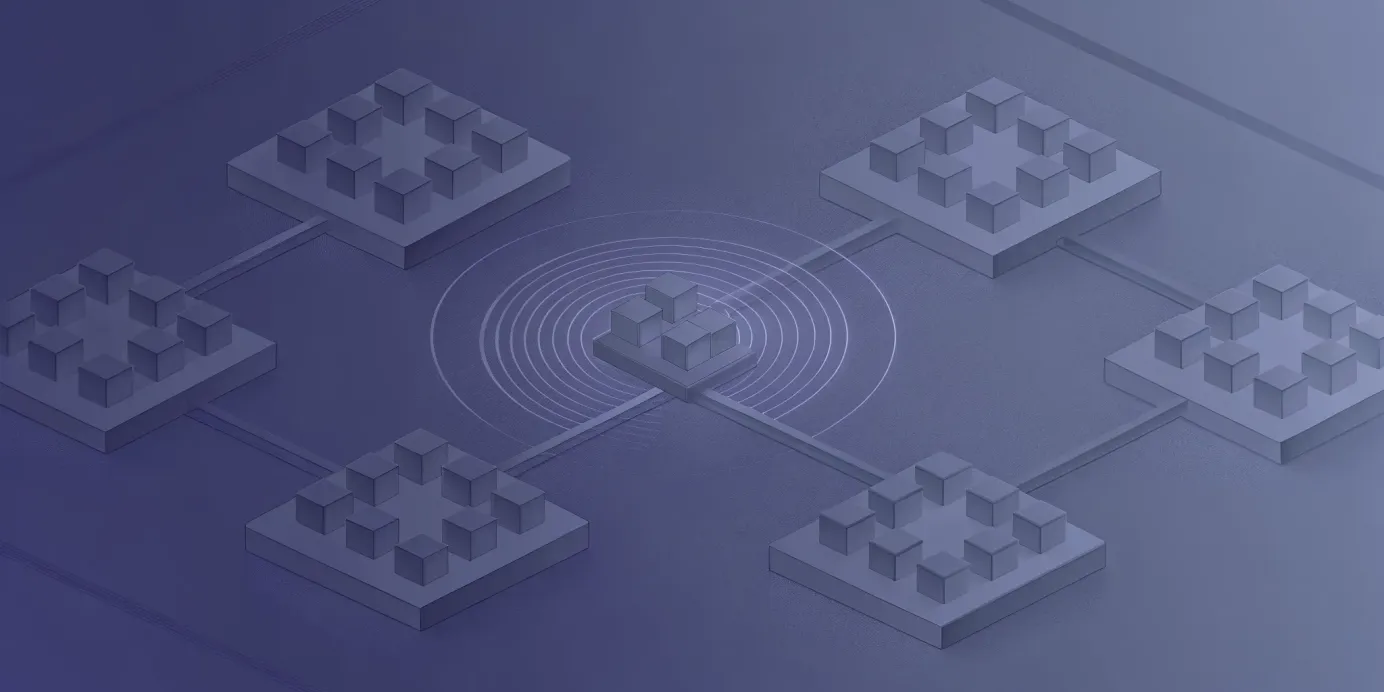
A Kubernetes fleet is a collection of clusters managed as a single logical unit. Instead of operating clusters independently, fleet management standardizes configuration, security, and application delivery across the entire set. A fleet can span all clusters in an organization or a scoped subset (e.g., production-only or region-specific).
At small scale, per-cluster workflows are tolerable. At fleet scale, they break down. Manual operations introduce configuration drift, inconsistent policy enforcement, and operational bottlenecks. Clusters diverge into “snowflakes,” making debugging, patching, and compliance verification expensive and error-prone.
Fleet management replaces this with a centralized, policy-driven model. Platform teams define desired state once and propagate it across heterogeneous environments (on-prem, multi-cloud, and edge). The objective is convergence: every cluster continuously reconciles toward the same baseline, eliminating drift and improving reliability.
Key Components of Fleet Management
Centralized control plane
A single control surface for defining and distributing configuration, policies, and workloads across clusters. Plural provides this via a unified interface, removing the need to manage per-cluster credentials and contexts.
GitOps workflow
Git is the source of truth for cluster state. Changes are declarative, versioned, and reviewed, then reconciled automatically by agents running in each cluster. This enforces consistency and provides a full audit trail.
Policy and security management
Fleet-wide enforcement of RBAC, network policies, and admission controls. Policies are defined once and applied uniformly, ensuring consistent compliance and reducing misconfiguration risk.
How It Differs From Single-Cluster Management
Single-cluster operations are typically imperative: operators connect to a cluster, run commands, and apply manifests directly. This does not scale—it's slow, non-repeatable, and prone to drift across environments.
Fleet management is declarative and centralized. You define the desired state for a set of clusters, and reconciliation loops enforce that state continuously. Actions like rolling out an application, rotating credentials, or enforcing a new policy are executed once and applied consistently across the fleet. This shift—from per-cluster imperative control to fleet-wide declarative convergence—is the core architectural difference.
Why Do You Need Kubernetes Fleet Management?
As your Kubernetes footprint expands, per-cluster operations introduce systemic inefficiencies: duplicated effort, policy drift, and poor cost visibility. What begins as a manageable setup becomes a distributed system of clusters across teams, regions, and environments. Fleet management shifts the model from cluster-by-cluster control to centralized, policy-driven operations, enabling consistent, scalable infrastructure management.
Tame Operational Complexity at Scale
Managing clusters independently does not compose. Each cluster evolves its own configuration, upgrade cadence, and operational quirks, leading to drift and brittle workflows.
Fleet management introduces a unified control plane that abstracts clusters into a single logical unit. Platform teams define changes once—application rollouts, configuration updates, or platform upgrades—and propagate them across the fleet. This eliminates repetitive workflows and reduces coordination overhead.
Plural implements this via a single-pane-of-glass interface, giving operators a consolidated view of cluster health, deployments, and configuration state across environments.
Solve Security and Compliance Challenges
Each additional cluster expands the attack surface and multiplies the risk of inconsistent policy enforcement. Without centralization, RBAC rules, network policies, and admission controls diverge, creating compliance gaps.
Fleet management enforces a uniform security baseline. Policies are defined once and distributed across all clusters, ensuring consistent access control and governance. This model reduces misconfiguration risk and simplifies audits.
With Plural, you can define RBAC and policy constructs centrally and propagate them fleet-wide using Global Services, ensuring every cluster converges on the same security posture.
Optimize Costs and Resource Utilization
Multi-cluster environments often suffer from resource fragmentation: over-provisioned nodes, underutilized workloads, and duplicated capacity buffers. Without cross-cluster visibility, cost optimization is largely guesswork.
Fleet management provides aggregated telemetry and resource insights across clusters, enabling informed scheduling and consolidation decisions. You can identify underutilized clusters, rebalance workloads, and standardize sizing strategies.
Plural’s multi-cluster dashboard exposes fleet-wide utilization metrics, helping teams track spend, detect inefficiencies, and continuously optimize resource allocation.
How Does Kubernetes Fleet Management Work?
Fleet management is built on a small set of composable patterns that prioritize security, consistency, and convergence at scale. Instead of coordinating clusters imperatively, these patterns establish a control loop where desired state is defined centrally and reconciled continuously across the fleet.
The Agent-Based Pull Architecture
Fleet systems typically use an agent per cluster that maintains a control loop with the central plane. Rather than exposing cluster APIs for inbound access, the agent initiates outbound (egress-only) communication and pulls desired state.
This pull-based model has concrete security and operability advantages:
- No inbound network exposure or VPN requirements
- No need to store long-lived cluster credentials centrally
- Works uniformly across cloud, on-prem, and edge environments
Plural’s deployment agent follows this design. Each cluster independently fetches configuration and deployment instructions, then reconciles local state. This keeps clusters loosely coupled while still enforcing global consistency.
GitOps-Driven Deployment Workflows
GitOps provides the declarative substrate for fleet operations. All cluster configuration and application state live in Git, which becomes the single source of truth.
The workflow is deterministic:
- Changes are proposed via pull requests
- Configuration is versioned and reviewed
- A controller (e.g., Plural CD) detects changes
- Agents reconcile cluster state to match Git
This eliminates configuration drift and ensures reproducibility. Rollbacks are trivial (revert a commit), and the entire system has an auditable history. At fleet scale, this is the only model that maintains consistency without increasing operational risk.
The Role of a Centralized Control Plane
The control plane acts as the coordination layer for the fleet. It does not directly mutate clusters; instead, it defines intent, aggregates state, and orchestrates workflows.
Core responsibilities include:
- Cluster grouping and scoping (e.g., prod vs staging, region-based segmentation)
- Policy definition and distribution
- Observability aggregation (health, deployments, drift)
- Access control and audit surfaces
Plural’s control plane provides this abstraction via a unified API and dashboard. Operators define fleet-wide intent once—deployments, policies, or updates—and rely on agents to enforce convergence across all clusters.
This separation of concerns—central intent, distributed reconciliation—is what allows fleet management to scale without introducing tight coupling or operational fragility.
Key Benefits of Fleet Management
Fleet management is not just an operational convenience; it’s a shift in control-plane design. By moving from per-cluster imperative workflows to fleet-wide declarative control, platform teams reduce toil, enforce consistency, and enable faster delivery. The result is a system that scales operationally as cluster count increases.
Reduce Operational Overhead
Per-cluster management creates linear operational cost: upgrades, patching, and configuration changes must be repeated across environments. This introduces toil and increases the likelihood of drift.
Fleet management centralizes these workflows. Changes are defined once and propagated automatically across the fleet via reconciliation loops. This removes repetitive tasks and standardizes execution.
Plural enables this through centralized orchestration, allowing platform teams to manage lifecycle operations—upgrades, policy changes, and deployments—from a single control surface.
Enhance Your Security Posture
Security inconsistencies scale with cluster count. Without central enforcement, RBAC policies, network rules, and admission controls diverge, creating exploitable gaps.
Fleet management establishes a uniform security baseline. Policies are defined declaratively and enforced across all clusters, ensuring consistent access control and compliance.
Plural operationalizes this with centralized RBAC and policy distribution, allowing teams to manage permissions and security controls fleet-wide without manual intervention.
Improve Developer Productivity
Infrastructure friction—manual provisioning, inconsistent environments, and ad hoc deployment workflows—directly slows development velocity.
Fleet management standardizes these interactions. Platform teams expose pre-defined, compliant infrastructure and deployment patterns, reducing the cognitive load on developers.
Plural’s Self-Service Catalog provides curated templates for applications and infrastructure, enabling developers to provision environments and deploy services without deep Kubernetes expertise.
Gain Unified Visibility and Control
Multi-cluster environments fragment observability. Without aggregation, engineers must correlate state across multiple systems, increasing MTTR during incidents.
Fleet management aggregates telemetry and state into a single control plane. This provides a consistent view of cluster health, deployment status, and resource utilization.
Plural’s multi-cluster dashboard delivers this unified visibility, enabling faster debugging, better capacity planning, and centralized operational control across all environments.
What Makes Fleet Management Effective?
Effective fleet management is defined by convergence, not just coordination. The system must continuously drive all clusters toward a consistent desired state while providing strong guarantees around security, observability, and reproducibility. This requires a set of tightly integrated primitives: automated delivery, declarative infrastructure, centralized observability, and policy enforcement.
Without these, you don’t have a fleet—you have a collection of loosely managed clusters with increasing drift and operational risk.
Continuous Deployment Systems
A fleet cannot be managed without deterministic deployment workflows. Continuous deployment (CD), typically implemented via GitOps, acts as the reconciliation engine for both applications and cluster configuration.
All state is declared in Git and changes flow through pull requests, creating an auditable and version-controlled pipeline. A controller (e.g., Plural CD) detects changes and ensures every target cluster converges to the declared state.
This eliminates manual rollout variance and ensures that deploying to 100 clusters is operationally equivalent to deploying to one.
Infrastructure as Code (IaC) Management
Cluster infrastructure—compute, networking, storage—must be managed declaratively to avoid drift and ensure repeatability. Manual provisioning introduces inconsistencies that compound at scale.
Infrastructure as Code (IaC), typically via tools like Terraform, defines infrastructure as versioned artifacts. Fleet management platforms integrate IaC into the same control loop as application delivery.
Plural Stacks provides a Kubernetes-native abstraction over Terraform, allowing infrastructure changes to follow the same GitOps workflow: versioned, reviewed, and automatically applied across environments.
Unified Monitoring and Observability
Fleet-scale systems require aggregated observability. Without centralized visibility, debugging becomes a distributed systems problem in itself.
Effective fleet management consolidates logs, metrics, events, and resource state into a single control plane. This enables:
- Faster incident triage (reduced MTTR)
- Cross-cluster correlation of failures
- Capacity and performance analysis at fleet scope
Plural’s unified dashboard exposes this aggregated state, allowing operators to inspect and debug resources across clusters without managing per-cluster access contexts.
Consistent Policy Enforcement
Policy enforcement must be declarative, centralized, and continuously reconciled. This includes RBAC, network policies, resource quotas, and admission controls.
An effective system does two things:
- Distributes policies fleet-wide from a central definition
- Detects and remediates drift between desired and actual state
Plural enables this via centralized RBAC and Global Services, ensuring that policy definitions are applied uniformly and enforced continuously across all clusters.
This closes the loop: desired state is defined once, enforced everywhere, and continuously validated—turning fleet management into a stable, scalable control system rather than a collection of ad hoc processes.
Common Fleet Management Challenges
Operating a fleet of Kubernetes clusters introduces systemic complexity that doesn’t appear at small scale. As cluster count grows, inconsistencies, manual interventions, and fragmented tooling compound into real operational risk. Without a cohesive fleet strategy, teams spend more time maintaining infrastructure than delivering value.
Managing Multi-Cloud and Hybrid Complexity
Fleet environments are rarely homogeneous. Clusters span managed services like EKS and GKE, along with on-prem or edge deployments. Each environment introduces different APIs, IAM models, and networking constraints.
This heterogeneity creates constant context switching and increases the probability of misconfiguration. A unified control plane abstracts these differences by standardizing how clusters are managed.
Plural uses an agent-based model to normalize interactions across environments. Operators work through a consistent interface while the underlying differences between cloud providers and on-prem systems are handled transparently.
Avoiding Manual Processes and Configuration Drift
Manual intervention does not scale. Ad hoc fixes—especially during incidents—create divergence between a cluster’s live state and its declared configuration. Over time, this drift accumulates into instability and security exposure.
GitOps-based reconciliation eliminates this class of issues. All changes are declarative, version-controlled, and automatically enforced. Clusters continuously converge toward the desired state defined in Git.
This replaces fragile, human-driven workflows with deterministic automation, ensuring consistency across the fleet.
Simplifying Cross-Cluster Troubleshooting
Debugging in a multi-cluster environment is inherently a distributed systems problem. Without centralized observability, engineers must correlate signals across multiple dashboards, credentials, and contexts.
This increases cognitive load and slows incident response.
Fleet management platforms aggregate telemetry—logs, metrics, events—into a single control plane. Plural’s embedded Kubernetes dashboard provides this unified view, enabling operators to inspect resources and diagnose issues across clusters without managing per-cluster access.
Scaling Your Deployment Processes
Deployment workflows that work for a single cluster break under fleet-scale requirements. As application count and environment segmentation grow, pipelines become bottlenecks.
A fleet-aware deployment system must:
- Support multiple packaging formats (YAML, Helm, Kustomize)
- Target specific cluster groups dynamically
- Ensure consistent rollout and rollback semantics
Plural’s deployment model automates this across the fleet, allowing teams to define rollout strategies once and apply them consistently. This turns deployments from a manual coordination task into a repeatable, scalable process aligned with GitOps principles.
Choosing Your Fleet Management Tools
Selecting the right tool for Kubernetes fleet management depends on your organization's scale, existing infrastructure, and operational maturity. The market offers a range of solutions, from unified platforms and native cloud services to open-source projects. Each comes with its own set of trade-offs regarding flexibility, vendor lock-in, and the engineering effort required for implementation and maintenance. Understanding these differences is the first step toward finding a tool that fits your team’s workflow and technical requirements.
Plural: A Unified Orchestration Platform
For teams seeking a comprehensive solution, a unified platform like Plural provides a single control plane for managing the entire lifecycle of your Kubernetes fleet. Plural combines GitOps-driven continuous deployment, infrastructure-as-code (IaC) management, and a secure, SSO-integrated dashboard into one cohesive system. This approach gives you centralized automation, security, visibility, and governance for all your clusters, regardless of where they run. Because Plural uses a secure, agent-based architecture, it can manage clusters in any cloud, on-premises, or at the edge without requiring complex network configurations. This makes it an ideal choice for organizations with multi-cloud or hybrid environments that need a consistent operational model across their entire infrastructure.
Native Cloud Provider Solutions
Major cloud providers offer their own tools for managing Kubernetes clusters within their ecosystems. For example, Azure Kubernetes Fleet Manager simplifies multicluster management for Azure Kubernetes Service, while Google Kubernetes Engine Fleets allow you to group and manage clusters across different projects. These solutions are deeply integrated with their respective platforms, which can be an advantage if your infrastructure is homogenous. However, relying on a native tool can lead to vendor lock-in, making it difficult to adopt a multi-cloud strategy or manage on-premises resources with the same workflow. They often solve for one piece of the puzzle but may lack the comprehensive capabilities of a dedicated orchestration platform.
Exploring Open-Source Alternatives
Open-source tools offer maximum flexibility and control. Projects like Rancher Fleet use a GitOps approach to manage cluster configurations and deployments. By combining various open-source tools, such as Argo CD for application delivery and Prometheus for monitoring, you can build a custom fleet management solution tailored to your specific needs. While this approach avoids vendor lock-in, it comes at a cost. Integrating, scaling, and maintaining a collection of disparate tools requires significant and ongoing engineering investment. Your team becomes responsible for the entire lifecycle of the platform, from initial setup and integration to patching and upgrades, which can distract from core business objectives.
How to Evaluate Your Options
When evaluating your options, consider how each tool addresses your core challenges. As your fleet gets more complex, it becomes harder to enforce security rules and meet compliance requirements. You need a solution that can scale policy enforcement consistently across all clusters. Look for tools that abstract away the complexity of individual clusters to provide high-level management and observability. A platform should offer a unified dashboard for troubleshooting, centralized RBAC for consistent permissions, and GitOps workflows to prevent configuration drift. Ultimately, the right tool will reduce operational overhead for your platform team while improving productivity for your developers.
Related Articles
Unified Cloud Orchestration for Kubernetes
Manage Kubernetes at scale through a single, enterprise-ready platform.
Frequently Asked Questions
How is fleet management different from just using a CI/CD pipeline? A CI/CD pipeline focuses on the application lifecycle, automating how your code gets built, tested, and deployed. Fleet management operates at a higher level of abstraction, concerning itself with the health, configuration, and security of the Kubernetes clusters themselves. While a CI/CD pipeline deploys an application to a cluster, a fleet management platform like Plural ensures all your clusters have the correct base configuration, security policies, and system-level services applied consistently. It manages the infrastructure platform that your CI/CD pipelines deploy to.
How does an agent-based architecture actually improve security? In a traditional push model, a central management plane needs network access and credentials to connect into each of your clusters. This creates a large attack surface and requires you to manage a central repository of sensitive credentials. An agent-based pull architecture, like the one Plural uses, reverses this. A lightweight agent inside each cluster initiates an egress-only connection out to the control plane. This means you don't need to open inbound firewall ports or expose your cluster's API server, which significantly strengthens your security posture, especially in multi-cloud or private network environments.
We already use Terraform for infrastructure. How does Plural fit in? Plural is designed to complement and streamline your existing Infrastructure as Code practices, not replace them. Many teams manage Terraform manually or with brittle scripts, which doesn't scale well. Plural Stacks provides a Kubernetes-native, API-driven workflow for managing your Terraform runs. You can define your Terraform modules in Git, and Plural will automate the plan and apply lifecycle through a pull request workflow. This gives you a version-controlled, auditable, and repeatable process for infrastructure changes that is fully integrated with your Kubernetes management.
Can I use Plural to manage clusters across different cloud providers and on-premise data centers? Yes, this is one of the primary challenges Plural is built to solve. The agent-based architecture is cloud-agnostic. As long as the agent can be installed on a Kubernetes cluster and has an outbound connection to the internet, it can be managed by the Plural control plane. This allows you to have a single, consistent workflow for managing clusters on AWS, Azure, GCP, and in on-premise environments. You get a unified dashboard and control plane for your entire hybrid fleet, abstracting away the complexities of each individual provider.
Is fleet management only for large enterprises, or can smaller teams benefit too? While the need for fleet management becomes critical at enterprise scale, smaller teams and startups can benefit significantly by adopting its principles early. Starting with a standardized, GitOps-driven approach prevents the accumulation of technical debt and configuration drift that often plagues growing organizations. For a small team, a platform like Plural provides a solid foundation for scaling, offering self-service capabilities and automation that allow developers to stay productive without needing a dedicated platform team from day one.

Newsletter
Join the newsletter to receive the latest updates in your inbox.