Kubernetes Security News: Fleet Triage and Defense Guide
Use Kubernetes security news to verify affected versions, exposure, patch status, and ownership, then coordinate reviewable remediation across your fleet.

A Kubernetes vulnerability headline is not yet a remediation decision. Before changing a cluster, platform teams need to identify the affected component and compare the deployed version with the advisory. They also need to assess exposure and name the owner of the change.
See how Plural helps platform teams manage and remediate Kubernetes fleets.
Kubernetes security news is most useful when each notice is verified against an authoritative source, mapped to the actual fleet, and converted into a prioritized, reviewable action. That process accounts for configuration and exposure, not only patch availability.
CISA and NSA describe Kubernetes setup complexity and common misconfiguration as security concerns, while Kubernetes publishes an official CVE feed for programmatic tracking. The operating challenge is turning those inputs into an evidence review with clear ownership and a verifiable result.
Why does Kubernetes security news need an operating model?
A security headline is an input, not a remediation decision. It may identify a vulnerable component, but it does not show whether that component is installed, reachable, configured in the affected way, or owned by your team. An operating model makes the decision consistent across clusters.
A useful operating model turns Kubernetes security posture into a repeatable evidence review. For each notice, record five questions:
- What is affected? Identify the component, version range, and deployment location.
- How could it be reached? Check network exposure, enabled interfaces, admission paths, permissions, and relevant configuration.
- What is the current status? Separate a published vulnerability from confirmed exploitation, an available fix, and a temporary mitigation.
- Who owns the decision? Assign the cluster, platform service, application, or infrastructure owner responsible for review and rollout.
- How will you verify it? Define the evidence that closes the action, such as a version check, configuration change, test, or post-deployment scan.
Start with authoritative sources, then add context
For Kubernetes project advisories, begin with the official Kubernetes CVE feed. It provides JSON and RSS formats for monitored intake. Use the advisory to establish the affected component, versions, and remediation guidance. Then use NVD, vendor notices, scanner output, and inventory data to add context without treating those sources as proof of exposure.
Security risk can begin before patching. CISA and NSA guidance emphasizes hardening against common misconfigurations, not only installing a newer release. Teams can pair that work with implementing CIS benchmark standards and a deeper review of Kubernetes cluster security. The objective is not to collect more alerts. It is to turn each relevant alert into a bounded, reviewable fleet decision.
What do the latest Kubernetes security advisories actually say?
The official Kubernetes CVE feed is the right starting point for current Kubernetes security news, but it is a dated index of project advisories. Its records describe behaviors to investigate. They do not establish that every cluster is affected, that a component is installed, or that a particular version is exploitable in your environment.
The feed lists CVE-2026-3865 as a path-traversal issue in the CSI Driver for SMB. Its subDir handling may allow unintended directories to be deleted on the SMB server. CVE-2026-3864 describes an analogous risk in the CSI Driver for NFS. Teams must determine whether either driver is installed and whether the relevant storage path exists.
The feed also lists several ingress-nginx issues. CVE-2026-4342 concerns comment-based nginx configuration injection. CVE-2026-3288 concerns injection through rewrite-target. CVE-2026-24513 describes an auth-url protection bypass, while CVE-2026-24514 describes a denial-of-service condition involving the admission controller. These behaviors are distinct and should not become one generic ingress finding.
Read the underlying advisory before choosing an action. Confirm affected versions, fixed versions, severity context, prerequisites, and available mitigations. The official Kubernetes CVE feed provides the project-maintained index and links to the underlying records. A feed description alone is not enough to authorize an upgrade or declare a cluster exposed.
Validate fixed-version fields as well. In a May 26, 2026 correction, Kubernetes explained that some older unfixed CVE records carried incorrect fixed-version fields. Treat the current advisory, release information, and the version actually running in your fleet as the evidence for a remediation decision.
Turn Kubernetes security advisories into reviewable fleet remediation with Plural.
How can teams separate exploitability, exposure, and patch status?
A vulnerability notice becomes actionable only when its evidence is connected to the fleet. Treat each item in a Kubernetes security news workflow as a record with distinct fields, rather than collapsing every signal into a severity label or scanner count.
- Source and date: Record the advisory, vendor notice, or official feed entry and the date reviewed.
- Component and version: Name the affected component, image, chart, or admission integration. Compare the detected version with the affected and fixed ranges in the authoritative advisory.
- Exploitability: Capture evidence that an attack path exists, such as reachable functionality, required permissions, or a documented prerequisite. A CVE's existence does not prove exploitability.
- Exposure: Document whether the component is installed, reachable, enabled, and used. A vulnerable package in an unused image is a different decision from an exposed ingress controller.
- Patch or mitigation: Record the confirmed fixed release, upgrade path, configuration change, or compensating control. If the source does not state a fix, mark patch status as unknown.
- Owner and verification: Assign the application or platform owner, define the change to review, and specify how rollout will be verified across clusters.
| Field | Question to answer | Evidence to retain |
|---|---|---|
| Source and date | Who published the notice, and when? | Official advisory URL and review date |
| Component and version | What is deployed, and does its version match the affected range? | Inventory record and advisory version range |
| Exploitability and exposure | Can the relevant attack path reach this deployment? | Configuration, permissions, network path, and usage |
| Patch or mitigation | What supported action reduces the risk? | Fixed release, mitigation, or documented exception |
| Owner and verification | Who changes it, and how will success be proven? | Reviewable change, rollout result, and follow-up check |
Authoritative sources answer different questions. The NVD record for CVE-2025-4563 demonstrates why enrichment status needs careful interpretation. An NVD record can state that it is not being prioritized for enrichment. That status does not establish exploitability, exposure, or remediation priority for your clusters.
Use this evidence model to turn a scanner result into a reviewable decision: a confirmed affected component. Confirmed fleet exposure, supported mitigation, named owner, and a test that can prove risk is reduced. Keep the advisory and deployment evidence attached to the change.
What is a repeatable Kubernetes fleet triage workflow?
A security notice becomes useful when it can be translated into a bounded decision for every affected cluster. Treat triage as an engineering workflow, not a race to apply the first available patch. The CISA and NSA Kubernetes hardening guidance is a useful reminder that configuration complexity can create security work without a package upgrade.
- Inventory the fleet. Record each cluster, environment, owner, Kubernetes version, node image, admission configuration, ingress implementation, CSI drivers, and externally reachable endpoints. Include dormant or isolated clusters.
- Map the vulnerable components. Translate the advisory into inventory queries. Identify the named controller, driver, image, chart, library, or configuration field, then map it to namespaces, workloads, and repositories. Start with the official Kubernetes CVE feed, then read the underlying notice.
- Assess reachable paths. Determine whether the component can receive the relevant input, from which network zones, and under which identity. Check ingress routes, admission requests, storage-server access, service accounts, and policy boundaries.
- Confirm versions and status. Compare deployed versions and configuration against the advisory's affected ranges, fixed versions, and mitigations. Capture the source date, exact version observed, and any ambiguity.
- Choose and open a reviewable change. Select the least risky supported mitigation: upgrade, configuration change, policy restriction, component removal, or compensating control. Create a GitOps pull request or equivalent change record with evidence, test plan, owner, rollback path, and exception rationale.
- Verify the rollout. Confirm that the intended version or control reached every in-scope cluster. Re-run inventory and exposure checks, inspect health, and record exceptions that remain. A merged pull request is not proof that the change reached the fleet.
This process keeps GitOps automation aligned with human review. It gives platform and security teams a shared audit trail showing what was affected, why it mattered, what changed, and how the fleet was checked afterward.
How does Plural turn security news into reviewable remediation?
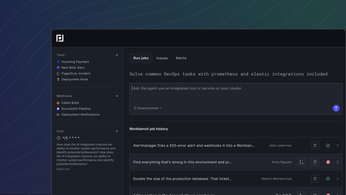
Security news becomes operationally useful when a team can connect an advisory to the components running in its fleet. Plural approaches that problem through an AI-native, unified control plane for multi-cluster Kubernetes management. Its public product description says scheduled jobs scan the estate for known CVEs, prioritize findings by exposure, and open pull requests for affected services or stacks.
From an advisory to an owned change
The workflow still depends on engineering judgment. A scan can identify a known vulnerability, but reviewers must confirm the affected component, version, deployment context, and reachable paths. Plural makes that work visible across the fleet and expresses proposed remediation as a reviewable change. Teams can inspect the pull request, check its effect on the relevant service or stack. And use their existing GitOps review process before changes are pulled into target clusters.
This is useful when the same service is deployed across clusters with different versions, configuration, or exposure. A unified view helps platform engineers distinguish a broad inventory finding from a change that needs immediate attention. It supports the wider discipline of Kubernetes security posture, where operational context matters alongside vulnerability records.
Why the architecture matters for sensitive fleets
Plural is self-hosted and uses an agent-based pull architecture. Agents use egress-only networking. Credentials remain local rather than being placed in a central credential store. That limits the control plane's role in reaching cluster environments while allowing agents to retrieve approved state and apply GitOps-managed changes.
For regulated organizations, this model addresses deployment constraints that a conventional centralized service may not fit. Plural supports air-gapped environments and teams with data-sovereignty and zero-trust requirements. Teams can learn more about the implementation model in the Plural documentation, then evaluate each proposed remediation against their own approval, testing, and rollout controls.
How should teams use Kubernetes security news to protect a fleet?
Treat Kubernetes security news as a standing operating input, not an occasional interruption. The official Kubernetes CVE feed is available in machine-readable JSON and RSS formats. So platform teams can route new advisories into the same review process used for production changes. Start with the advisory, then record what it confirms: affected component, relevant versions, exposure conditions, mitigations, and the responsible owner.
Ownership should be explicit. A platform or security engineer can triage the notice, while service owners confirm whether the component is deployed and reachable. Maintain an inventory of clusters, control-plane versions, add-ons, ingress controllers, CSI drivers, images, and security controls so a notice can be matched to real assets.
Keep exceptions visible and time-bound. If a team cannot update immediately, document the affected assets, reason for the exception, compensating control, approving owner, and next review date. A useful dashboard should distinguish notices received, assets assessed, changes approved, rollouts completed, and verification still outstanding. Remediation completion is more meaningful than alert volume.
Use the cadence to improve baseline controls between incidents. Review admission policies, network boundaries, identity configuration, image provenance, logging, and upgrade procedures against the fleet's threat model. Teams can use a Kubernetes security posture review, implementing CIS benchmark standards, and the zero-trust Kubernetes guide as complementary architecture lenses.
Close the loop after every remediation. Confirm the intended version or configuration, verify that the relevant exposure is addressed, and update the inventory and runbook. In regulated or air-gapped environments, record evidence locally and preserve the approval trail. This turns security news into a durable day-2 operations discipline.
See how Plural helps teams manage and remediate Kubernetes fleets.
Frequently Asked Questions
Kubernetes security news should be verified against an authoritative advisory, mapped to deployed components and exposure, assigned to an owner, and closed with rollout evidence. These answers cover checks platform teams can repeat across a fleet.
What is the most reliable source for Kubernetes security news?
Start with the Kubernetes project's official CVE feed, available in JSON and RSS formats, then read the linked advisory for affected components, versions, fixes, and mitigations. Use CISA and NSA guidance to evaluate hardening and configuration risks, not as a substitute for the project advisory.
How do I check whether a Kubernetes vulnerability affects my clusters?
Identify the component named in the advisory, inventory it across every cluster, and compare deployed versions with the advisory's affected and fixed ranges. Then check exposure, reachable paths, and mitigations. A matching component alone does not establish exploitability or indicate that every cluster needs the same response.
What does a scanner result tell me?
A scanner result is an investigation signal, not a complete remediation decision. Confirm the source, component, installed version, exposure, patch or mitigation status, owner, and rollout evidence. Review the underlying CVE and project or vendor advisory before prioritizing work.
How should teams triage the same advisory across multiple clusters?
Build one affected-component inventory, group clusters by version and exposure, assign an owner for each group, and choose a reviewed mitigation or upgrade path. Apply the change through an auditable workflow, verify the rollout, and record exceptions. This prevents a headline from becoming an untracked fleet-wide risk.
How does Plural fit into Kubernetes security remediation?
Plural provides a unified control plane for multi-cluster Kubernetes management. Its public product description includes scheduled CVE scans, exposure-based prioritization, and pull requests for affected services or stacks. Its self-hosted, agent-based pull architecture is designed for air-gapped and regulated environments where local credentials, data sovereignty, and zero-trust controls matter.
Ready to make Kubernetes security work reviewable?
Security news becomes more useful when your team connects verified findings to the right clusters, owners, and remediation changes. Plural gives platform teams a unified control plane for managing Kubernetes fleets and turning security priorities into an operational workflow. Its self-hosted, agent-based pull architecture suits teams that need control over credentials and data.

Newsletter
Join the newsletter to receive the latest updates in your inbox.