What Is AIOps? AIOps for Kubernetes Explained

Large Kubernetes clusters often generate over 5,000 alerts per day, burying critical issues under a mountain of noise. This crushing volume of data makes manual incident response nearly impossible for platform teams. It forces engineers to spend more time on alert triage than on building reliable infrastructure.
The core definition of what is aiops involves using artificial intelligence and machine learning to automate and optimize complex IT service management workflows across massive cloud fleet infrastructure. Coined by Gartner in 2016, this field uses natural language processing and machine learning to unify telemetry from siloed logs, metrics, and traces to find patterns and anomalies. These systems are especially critical for Kubernetes fleets where the scale of operational data often exceeds human ability for manual triage and rapid incident response across all environments. According to Splunk, implementing these tools can reduce daily alert noise from over 5,000 items to about 100 actionable incidents for platform engineering teams working at scale.
Understanding how these intelligent systems operate is the first step toward getting back engineering hours from manual operations. To fully grasp how this technology applies to your Kubernetes fleet, you must first look at the basics of the field. We will start by looking at the specific parts and history in our section on What Is AIOps? and its role in modern systems. The first step is for us to clearly define
What Is AIOps?
AIOps stands for artificial intelligence for IT operations. Gartner coined the term in 2016 to describe a new class of tools. These tools use big data and machine learning to help IT teams work better. Before AIOps, teams had to manage many separate tools for logs, metrics, alerts, and tickets. These siloed systems made it hard to see the big picture when things went wrong.
Today, AIOps platforms unify these data streams. By using natural language processing (NLP) and machine learning models, these systems can automate how teams manage their services. This shift allows engineers to stop chasing false pings and start solving real problems. Instead of manual checks, AI-native platforms find patterns and fix issues on their own.
A shift to unified platforms
In the past, IT teams used different tools for each part of their stack. One tool would track logs, another would watch metrics, and a third would handle alerts. This siloed approach meant that data lived in separate places. When a bug occurred, engineers had to check each tool one by one to find the root cause. This manual work took time and slowed down repairs.
AIOps changes this by bringing all data into one unified platform. These AI-native systems use machine learning to look at all your logs, traces, and metrics at once. This single view makes it easy to spot links between events that people might miss. By breaking down silos, AIOps helps teams move from reactive fixes to proactive care. This is a key part of modern AI-powered DevOps, where speed and stability must work together.
Solving the alert fatigue problem
One of the biggest problems in IT is alert fatigue. Modern systems can send out thousands of alerts every day. Most of these are noise, minor issues that do not need a fix. For an engineer, sorting through 5,000 pings to find the five that matter is a huge waste of time. It also makes it easy to miss a real crisis in the middle of all the noise.
AIOps tools solve this by grouping related events. They filter out the noise so teams can focus. In many cases, teams see their daily alerts drop from 5,000+ to about 100 actionable items. This massive drop lets engineers focus on work that adds value. It also reduces the stress of constant pings, leading to better outcomes for the whole team.
Automation and incident response
AIOps does more than just find problems; it helps fix them too. By using intelligent agents, these platforms can automate parts of the incident response. For example, a system might find a slow database and restart the service before a user even notices. This kind of automated fix keeps services running without human help.
This level of automation is vital for complex setups like Kubernetes. In a large fleet, manual checks are not enough to keep up with the pace of change. AIOps platforms can spot problems and fix them fast. This speed is crucial for teams that need high uptime and reliability.
How Does AIOps Work?
AIOps works by gathering data from many sources and using machine learning to find patterns. The process has four main steps. First, it collects data from logs, metrics, and traces all at once. Next, it processes this data in real time to spot unusual events. Then, it links related alerts together into one incident. Finally, it uses that insight to fix issues, often without any human input. This flow creates a smooth path from raw data to automated repair.
Data collection and unification
The first step in AIOps is to bring all your data together. Traditional monitoring tools look at one source at a time. An AIOps platform, on the other hand, pulls in logs, metrics, traces, and even ticket data into one system. This unified view allows the platform to see the whole picture, not just one piece. For example, if a Kubernetes pod crashes, the platform sees the log error, the metric spike, and the trace slowdown all at once.
This full view is important because issues in modern systems rarely show up in only one data source. A bug might first show up as a slow metric, then cause an error in logs, and finally trigger an alert. Without a unified view, engineers have to jump between tools to piece the story together. AIOps does this automatically, saving time and reducing the chance of missing a key signal.
Pattern detection and anomaly identification
Once data is collected, AIOps uses machine learning to find patterns. These models learn what normal looks like for your system. They track baseline metrics like CPU use, memory, and response times. When something deviates from the baseline, the system flags it as an anomaly. This approach cuts down on false alarms because the model knows what is normal for your specific setup.
For Kubernetes fleets, this is a game changer. Clusters can have thousands of containers, each with its own metrics. A manual team cannot track all of these at once. An AIOps platform, however, can watch every container and spot issues before they grow. For instance, if a new deployment causes a slow memory leak, the platform catches the trend early and alerts the team before it becomes a crisis.
AI versus Traditional IT Operations
The main difference between AIOps and traditional IT operations is speed and scale. Traditional IT ops rely on rules that humans write. For example, a team might set a rule to alert if CPU goes over 90%. These rules are simple, but they miss complex issues. AIOps uses machine learning models that adapt and learn over time. They can spot subtle patterns that fixed rules cannot see.
Another key difference is how each approach handles incident response. Traditional teams often use a runbook where humans follow steps to fix a known issue. This process works for common problems but falls short when a new issue appears. AIOps platforms, on the other hand, can suggest or even automate the fix based on past incidents. This shift from manual runbooks to automated responses is a core benefit of AIOps.
For a clear comparison, here is how DevOps, MLOps, and AIOps differ:
| Aspect | DevOps | MLOps | AIOps |
|---|---|---|---|
| Primary focus | CI/CD pipelines and deployment speed | ML model lifecycle and data pipelines | IT operations automation and intelligence |
| Key tools | Git, CI/CD, containers, monitoring | MLflow, Kubeflow, model registries | ML platforms, event correlation, automation |
| Team type | Dev + Ops collaboration | Data scientists + ML engineers | Platform/SRE teams + AI systems |
| Automation level | Medium (pipelines, infra-as-code) | Medium (data/model pipelines) | High (automatic detection and remediation) |
| Key challenge | Deployment speed vs stability | Model drift and data quality | Alert fatigue and data volume |
Does AIOps Replace SREs and DevOps Engineers?
No. AIOps does not replace engineers; it makes them more effective. The goal of AIOps is to handle the noise so that engineers can focus on the work that matters. By automating alert triage and routine fixes, AIOps frees up skilled engineers to work on architecture, performance, and new features.
Think of AIOps as a force multiplier. A single SRE can manage more clusters with AIOps than without. The system watches for issues, groups alerts, and suggests fixes. The engineer then confirms and applies the fix, or adjusts the automation. This partnership between human expertise and machine speed is the real power of AIOps.
For teams running Kubernetes at scale, this partnership is critical. With AIOps, one platform team can manage dozens of clusters without growing headcount. Instead of hiring more engineers to handle alert volume, teams can invest in automation that lets their existing engineers do more.
AIOps Use Cases for Kubernetes
Kubernetes is one of the best use cases for AIOps. The dynamic nature of containers and the scale of modern fleets create exactly the kind of complexity that AIOps is built for. Here are some of the most powerful ways AIOps applies to Kubernetes environments.
Automated incident detection and response
In a Kubernetes cluster, incidents can happen fast. A pod might crash, a node might fail, or a service might slow down. AIOps platforms detect these events by watching all cluster signals at once. When an anomaly appears, the system groups related alerts into one incident. It then runs automated actions to fix common issues.
For example, if a node runs out of memory, AIOps can automatically cordon the node and move pods to healthy nodes. This kind of automated response keeps services running without waiting for a human to notice the alert. For teams with many clusters, this automation is essential for maintaining uptime.
Intelligent alert correlation for large fleets
One of the biggest pain points in Kubernetes operations is alert overload. A single misconfigured deployment can trigger dozens of alerts across different services. Engineers spend hours sorting through these alerts to find the root cause. AIOps solves this by correlating related alerts into a single incident.
For instance, if a database goes down, it might trigger alerts for the database, the app servers, the API gateway, and the monitoring system. AIOps sees that all of these alerts share a common root cause and groups them together. The engineer sees one incident instead of twenty alerts. This cuts down on noise and speeds up response times.
Proactive capacity planning and optimization
AIOps does more than react to problems; it also helps teams plan ahead. By analyzing usage trends, AIOps platforms can predict when a cluster will run out of resources. This allows teams to add capacity before an outage occurs. For example, if the platform sees that memory use is growing by 5 percent each week, it can warn the team to plan for a node upgrade.
This proactive approach is valuable for Kubernetes fleets where resource needs can change quickly. A new service or a spike in traffic can push a cluster to its limits. AIOps gives teams the visibility they need to stay ahead of demand.
Plural: AI-Native Kubernetes Fleet Management
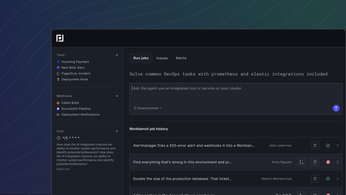
Plural is built as an AI-native, agent-based pull architecture for Kubernetes fleet management. Unlike traditional GitOps tools or manual management approaches, Plural combines Kubernetes CD, IaC management (Terraform, Pulumi, Ansible), AI-powered automation, and a central dashboard into one unified platform.
Plural's AI-native approach means the platform uses AI to reduce alert noise by 98 percent through intelligent correlation. The average team using Plural cuts day-2 operations workload by 95 percent, reducing cluster upgrades from months to days. With a single-pane-of-glass console across all clusters and an agent-based pull architecture that requires no central credential storage, Plural is designed for platform engineering teams that need to manage fleets of 10 or more clusters.
Ready to see how AIOps can transform your Kubernetes operations? Start your 14-day sandbox trial at plural.sh/pricing — no credit card required.
Frequently Asked Questions About AIOps
What is AIOps in simple terms?
AIOps is the use of AI and machine learning to automate IT operations. It helps teams manage complex systems by reducing alert noise, finding patterns, and automating fixes. Think of it as an intelligent assistant for your platform engineering team that watches all your alerts and handles the routine work.
How is AIOps different from DevOps?
DevOps focuses on the people, processes, and tools that help development and operations teams work together. AIOps focuses on using machine learning to automate specific operational tasks. While DevOps is a cultural and process movement, AIOps is a technology that makes those processes faster and more efficient.
Do you need AIOps for Kubernetes?
If you manage multiple Kubernetes clusters, the answer is likely yes. The scale of alerts and complexity of multi-cluster environments makes manual operations impractical. AIOps helps teams manage this complexity by automating alert triage, incident response, and capacity planning.
What are the key benefits of AIOps?
The key benefits include reduced alert fatigue through intelligent correlation, faster incident response through automation, proactive problem detection before outages occur, and more efficient use of engineering time. Teams using AIOps typically see a 90 percent or greater reduction in alert noise and significantly faster mean time to resolution.
Is AIOps expensive to implement?
Costs vary by platform and scale. Many AIOps platforms offer tiered pricing, including free sandbox tiers for evaluation. For example, Plural offers a 14-day free sandbox trial with no credit card required. The return on investment comes from reduced operational overhead, fewer outages, and more productive engineering teams.
Does AIOps work with existing monitoring tools?
Yes. Most AIOps platforms integrate with existing monitoring and observability tools through APIs. They ingest data from Prometheus, Grafana, Datadog, New Relic, and other common tools. This means you can add AIOps to your stack without replacing your current monitoring setup.

Newsletter
Join the newsletter to receive the latest updates in your inbox.